Published on July 31, 2026

Bagikan artikel:
Why personalized learning helps every child build confidence and succeed in English at their own pace.
Imagine two students entering seventh grade.
They are the same age, attend the same school, use the same English textbook, and sit in the same classroom. Yet when their teacher asks them to introduce themselves in English, the difference is immediately noticeable.
One student speaks confidently, forming simple sentences with ease. The other hesitates, searching for the right words and taking extra time to express basic ideas.
This raises an important question for parents and educators:
Should both students begin their English learning journey at exactly the same level?
Probably not.
Every child arrives in the classroom with a different learning story. Those differences don't define intelligence—they reflect each child's experiences, opportunities, and learning journey up to that point.
That's why effective education isn't about making every student start from the same place.
It's about helping every student start from the right place.
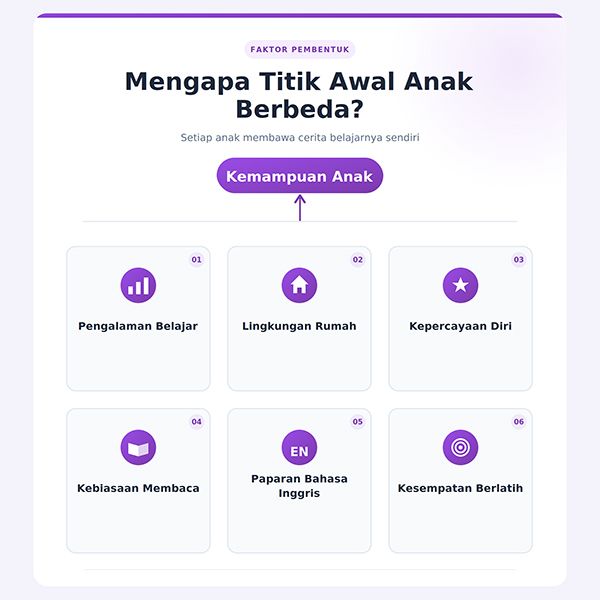
A child's English ability is shaped by far more than classroom instruction alone.
Some children grow up listening to English songs, watching animated movies, or reading bilingual books. Others attend after-school language programs, while many begin learning English more seriously only when they enter middle school.
Family environment, exposure to English, reading habits, confidence, access to learning resources, and opportunities to practice all influence how children develop their language skills.
For this reason, students in the same classroom often begin with different levels of English proficiency.
And that's completely normal.
The goal isn't to make every child start at the same level.
The goal is to help every child start at the level that best supports their growth.
Traditional classrooms often present the same lesson to every student at the same pace.
While this approach may seem practical, it doesn't always support meaningful learning.
When lessons are too difficult, students can quickly become frustrated and lose confidence. Over time, they may begin to believe that English is simply "too hard."
On the other hand, students who have already mastered the basics may become disengaged if they're asked to repeat concepts they already understand.
In both cases, learning slows down.

Students make the greatest progress when learning materials are appropriately challenging—difficult enough to encourage growth, yet achievable enough to build confidence.
This is where personalized learning becomes important.
Rather than expecting every learner to follow exactly the same path, personalized learning recognizes that every child has different strengths, needs, and learning readiness.
One approach that supports this philosophy is adaptive learning.
Adaptive learning uses assessment and ongoing learning data to recommend content and learning pathways that match each student's current ability.
The goal isn't to make learning easier.
The goal is to make learning more meaningful by ensuring that students build knowledge step by step, with confidence at every stage.
Before choosing the most appropriate learning pathway, it's important to understand where each learner is today.
That's the purpose of LearningRoom's English Skill Test (EST).
By assessing students' Listening and Reading skills, the EST provides a clearer picture of their current English proficiency and recommends a learning level that best matches their abilities.
The recommendation isn't a judgment of a child's potential.
Instead, it helps students begin their learning journey from a place where they are most likely to succeed.
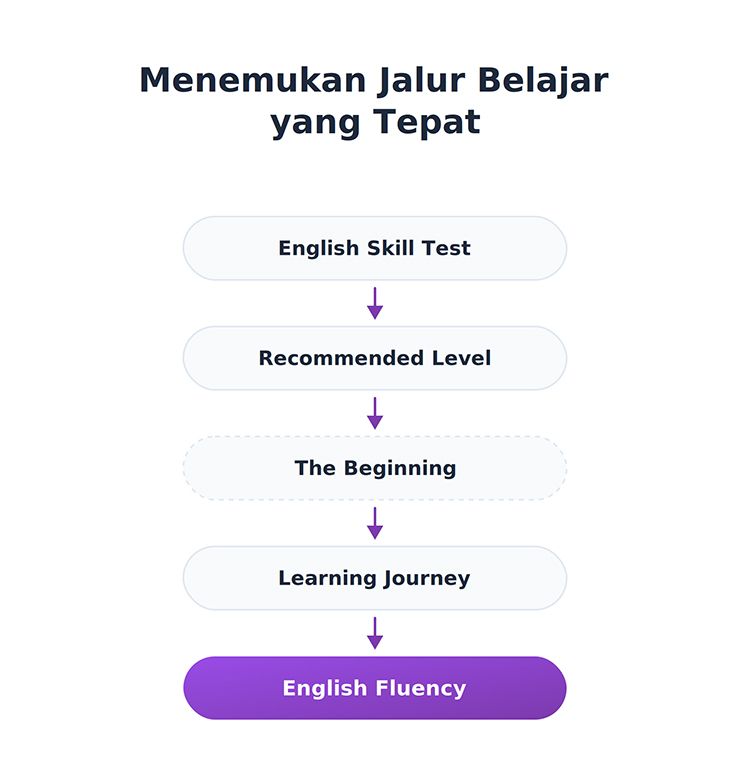
When children learn at the right level, they gain confidence, develop stronger understanding, and build steady progress over time.
Sometimes the English Skill Test recommends that students begin with The Beginning.
For some parents, this recommendation may initially feel disappointing.
But The Beginning isn't a sign that a child is behind.
It's an opportunity to strengthen the foundation that future learning depends on.
Think about building a house.
The higher you want it to stand, the stronger its foundation needs to be.
Learning English follows the same principle.
Building vocabulary, strengthening grammar, improving reading comprehension, and understanding sentence structure all create the confidence students need for more advanced learning later on.
A stronger foundation doesn't slow progress.
It makes future progress possible.
An English Skill Test is only the beginning.
What truly shapes a child's learning journey is the support they receive afterward.
Parents can encourage children by celebrating progress instead of comparing results with others. Every learner grows at a different pace, and every improvement deserves recognition.

Teachers also play a valuable role by using assessment results to better understand students' learning needs and provide appropriate guidance.
When parents, teachers, and learning platforms share the same goal, children feel supported rather than judged.
And that's when meaningful learning begins.
Learning English isn't a race.
It's a journey built on curiosity, consistency, and strong foundations.
Not every child needs to begin from the same level.
What matters most is helping every learner begin from the level that is right for them.
Through the English Skill Test, LearningRoom helps parents and educators understand where students are today—so they can guide every child toward a learning journey that is more confident, more personalized, and more meaningful.
Because education isn't about making every child follow the same path.
It's about helping every child reach their full potential.
Every child learns differently.
Help them begin their English journey with confidence by discovering the learning level that best matches their current abilities through LearningRoom English Skill Test.
***
Previous
Aktivitas Menyenangkan Belajar Bahasa Inggris
Next
Sosialisasi LearningRoom di Kupang Berjalan Lancar dan Siap Pakai di Sekolah Bulan Juli 2024


10 Jun - 3 min read

10 Jun - 3 min read

10 Jun - 3 min read

10 Jun - 3 min read
Paling banyak dibaca
01
10 Jun - 3 min read
01
10 Jun - 3 min read
01
01
10 Jun - 3 min read
01
10 Jun - 3 min read
01
10 Jun - 3 min read
01
10 Jun - 3 min read
01
10 Jun - 3 min read
01
10 Jun - 3 min read
01
10 Jun - 3 min read
01
10 Jun - 3 min read
01
10 Jun - 3 min read

5/6/2024 5:11:50 AM - 3 min read

6/27/2024 8:10:51 AM - 3 min read
6/3/2026 4:04:11 AM - 3 min read

10/15/2024 4:40:33 AM - 3 min read

5/6/2024 8:04:23 AM - 3 min read

7/11/2025 4:26:17 AM - 3 min read

5/6/2024 8:06:24 AM - 3 min read

6/10/2024 3:29:56 AM - 3 min read

5/6/2024 5:21:03 AM - 3 min read

5/28/2024 11:02:22 AM - 3 min read
1/30/2025 11:15:01 AM - 3 min read

8/7/2024 3:54:20 AM - 3 min read

Suka dengan Artikel Ini?
Berlangganan newsletter kami untuk mendapatkan artikel menarik dan penawaran khusus langsung melalui email.
Gratis dan berhenti berlangganan kapan saja.

Ingin membaca lebih banyak artikel seperti ini?
Berlangganan newsletter bulanan kami.