Published on June 29, 2026

Bagikan artikel:
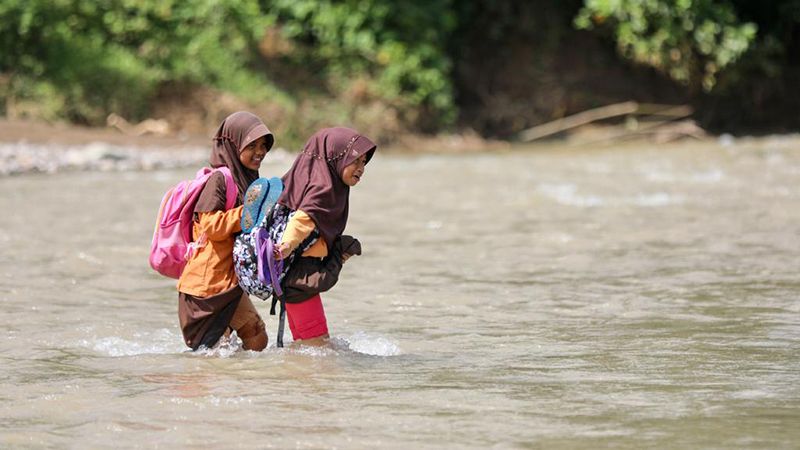
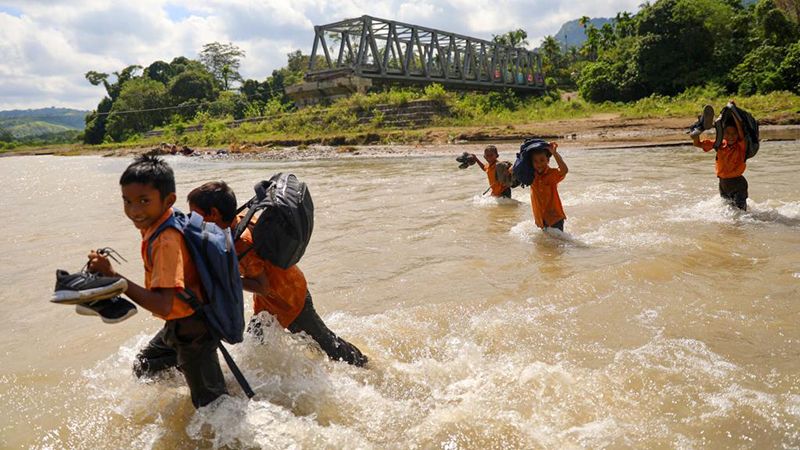
On the morning of Friday, June 5, 2026, a group of children in red-and-white school uniforms stood quietly beside a river in Jambak Village, Pante Ceureumen District, in Indonesia’s West Aceh Regency.
The water was muddy.
The current was strong.
Their school bags and books had been wrapped carefully in plastic to keep them dry.
One by one, they took off their shoes.
Some rolled up their uniforms.
Then they stepped into the river.
They were not swimming for fun.
They were trying to get to school.
The children, students of Alue Lhok Elementary School, had already crossed hilly roads and flood-damaged paths left behind by a major disaster months earlier.
The river was simply the final obstacle standing between them and their classroom.
For them, this was not an extraordinary journey.
It was Friday.
It was school.
And it was routine.
Footage of their journey eventually spread online and captured national attention across Indonesia.
But perhaps the more important question is not why this story shocked us.
Perhaps the real question is this:
How many similar stories never make it to a camera?
How many children walk for hours each day to reach a classroom?
How many teachers cross forests, rivers, and mountains simply to reach their students?
How many struggles remain invisible because they never appear on our timelines?
Sometimes stories feel extraordinary only because we are seeing them for the first time.
For the people living them, they are simply life.
For many families, getting to school means a short walk, a motorcycle ride, or waiting for a pickup in front of the house.
For many children in remote parts of Indonesia, it still means negotiating with nature every single day.
Rivers that overflow after heavy rain.
Roads that disappear into mud.
Bridges that have never been built.
Transportation that never arrives.
Eventually, the choice becomes painfully simple:
Take the risk and go to school.
Or stay home and miss it altogether.
The story of Alue Lhok Elementary School gained attention because someone happened to record it.
The uncomfortable reality is that there may be countless others that never were.
What makes this story even more striking is its timing.
Because Indonesia is currently undergoing one of the most ambitious educational transformations in its modern history.
Schools are becoming increasingly digital.
Learning management systems are expanding.
Artificial intelligence is beginning to enter classrooms.
Conversations about smart learning, adaptive education, and digital literacy are becoming mainstream.
All of this matters.
It matters enormously.
Because the future of education cannot be separated from technology.
Yet the story from West Aceh reminds us of an uncomfortable truth:
Indonesia is having two educational conversations at the same time.
One conversation is about the future of learning.
The other is still about reaching the classroom safely.
One conversation asks how technology can improve educational quality.
The other asks how children can physically get to school in the first place.
One is about transformation.
The other is still about access.
Some children in Indonesia are learning through touchscreens.
Others still need to touch the riverbed beneath them to avoid being swept away by the current on their way to school.
Both groups live in the same country.
Perhaps the problem is not that Indonesia is moving too quickly toward digital education.
Perhaps the problem is that we have become too comfortable defining digital transformation through devices alone.
These things matter.
But they are not the whole story.
At its core, educational digitalization should be about something much bigger:
Access.
Equity.
Opportunity.
Technology should not merely help already privileged schools move further ahead.
It should help underserved schools catch up.
Because ultimately, the success of educational transformation should not be measured by the number of devices distributed.
It should be measured by the number of children who finally gain access to opportunities that once felt out of reach.
So what does digitalization mean for children who still swim across rivers to get to school?
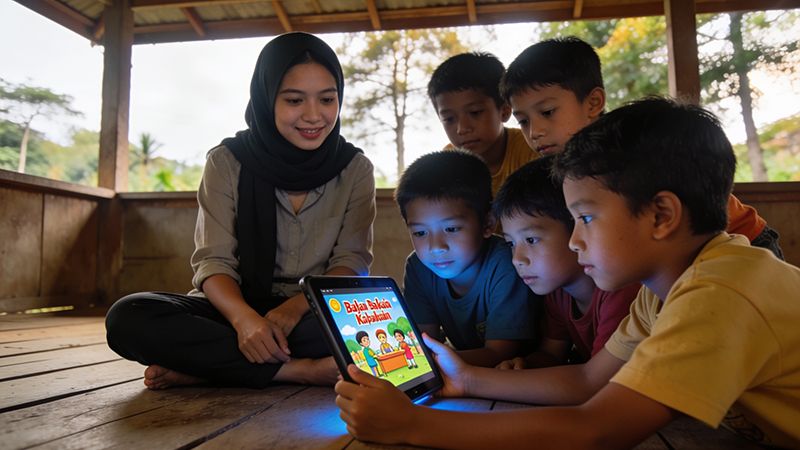
Perhaps it means something different.
Offline learning materials.
Low-bandwidth educational platforms.
Flexible access to content.
Remote teacher development.
Technology that works not only in ideal conditions, but also in difficult ones.
The best educational technology is not always the most sophisticated.
Sometimes, it is simply the technology that shows up where it is needed most.
Because for many communities, the challenge is not adopting the latest innovation.
The challenge is making sure learning continues despite geography.
That is where educational technology should work the hardest.
Not where it is easiest.
But where it matters most.
Tomorrow morning, those children may stand once again on the same riverbank.
The water may still be high.
The current may still be strong.
The risks may still remain.
And yet they will probably cross again.
Because their determination to learn is stronger than the river standing in their way.
The question is no longer whether these children are willing to learn.
The question is whether we are equally willing to ensure they no longer have to risk their safety simply to reach a classroom.
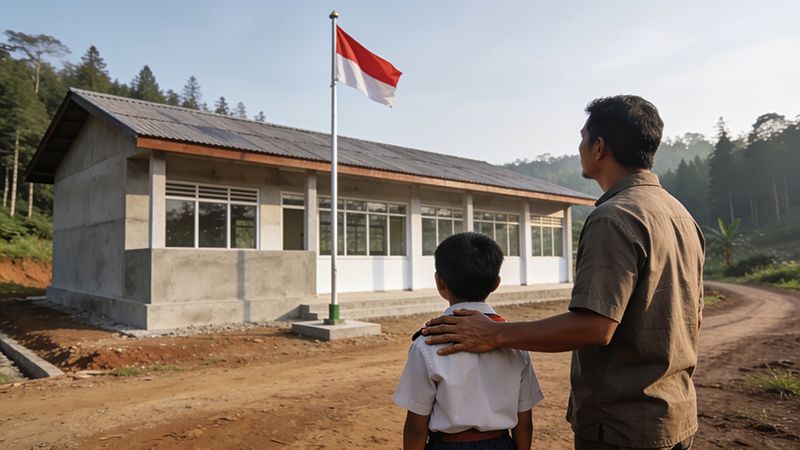
Education should challenge minds. Not survival.
For education technology companies, perhaps the greatest challenge today is no longer building more features or more advanced systems.
The challenge is ensuring technology reaches those who have spent too long outside the center of attention.
That digital transformation happens not only in schools that are already ready for it, but also in communities that need it most.
This belief, that technology should become a bridge toward educational equity, continues to inspire initiatives such as LearningRoom in supporting English learning opportunities for children across Indonesia.
Because the ultimate goal of digital education is not merely to make learning more modern.
It is to make opportunity more equal.
***

Previous
Peluncuran LearningRoom & CSR Panti Asuhan
Next
Manfaat Game Edukatif di Kelas Inggris
10 Jun - 3 min read

10 Jun - 3 min read

10 Jun - 3 min read

10 Jun - 3 min read
Paling banyak dibaca
01
10 Jun - 3 min read
01
10 Jun - 3 min read
01
01
10 Jun - 3 min read
01
10 Jun - 3 min read
01
10 Jun - 3 min read
01
10 Jun - 3 min read
01
10 Jun - 3 min read
01
10 Jun - 3 min read
01
10 Jun - 3 min read
01
10 Jun - 3 min read
01
10 Jun - 3 min read

5/6/2024 5:11:50 AM - 3 min read

6/27/2024 8:10:51 AM - 3 min read
6/3/2026 4:04:11 AM - 3 min read

10/15/2024 4:40:33 AM - 3 min read

5/6/2024 8:04:23 AM - 3 min read

7/11/2025 4:26:17 AM - 3 min read
5/6/2024 8:06:24 AM - 3 min read

6/10/2024 3:29:56 AM - 3 min read

5/6/2024 5:21:03 AM - 3 min read
5/28/2024 11:02:22 AM - 3 min read

1/30/2025 11:15:01 AM - 3 min read
8/7/2024 3:54:20 AM - 3 min read